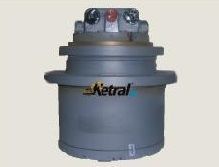
05/204600 final drive for JCB 330 excavator


If you decide to buy equipment at a low price, make sure that you communicate with the real seller. Find out as much information about the owner of the equipment as possible. One way of cheating is to represent yourself as a real company. In case of suspicion, inform us about this for additional control, through the feedback form.
Before you decide to make a purchase, carefully review several sales offers to understand the average cost of your chosen equipment. If the price of the offer you like is much lower than similar offers, think about it. A significant price difference may indicate hidden defects or an attempt by the seller to commit fraudulent acts.
Do not buy products which price is too different from the average price for similar equipment.
Do not give consent to dubious pledges and prepaid goods. In case of doubt, do not be afraid to clarify details, ask for additional photographs and documents for equipment, check the authenticity of documents, ask questions.
The most common type of fraud. Unfair sellers may request a certain amount of advance payment to “book” your right to purchase equipment. Thus, fraudsters can collect a large amount and disappear, no longer get in touch.
- Transfer of prepayment to the card
- Do not make an advance payment without paperwork confirming the process of transferring money, if during the communication the seller is in doubt.
- Transfer to the “Trustee” account
- Such a request should be alarming, most likely you are communicating with a fraudster.
- Transfer to a company account with a similar name
- Be careful, fraudsters may disguise themselves as well-known companies, making minor changes to the name. Do not transfer funds if the company name is in doubt.
- Substitution of own details in the invoice of a real company
- Before making a transfer, make sure that the specified details are correct, and whether they relate to the specified company.
Seller's contacts

 +86 189 289...
+86 189 2896 5241


 China


 China


 China


 China


 Poland, Koziegłowy

 Poland, Koziegłowy


 China


 Poland, Koziegłowy


 Poland, Koziegłowy


 China

 China


 Poland, Koziegłowy


 Poland, Koziegłowy


 China


 China
Product Overview
The JCB330 is the 30‑ton class machine British contractors reach for on big siteworks — a muscular, high‑volume excavator built to load trucks and strip cuttings all day. Its final drive, JCB part 05/204600, sits inside each track frame as an axial piston motor bolted to a planetary reduction box. That pair takes high‑pressure oil from the main pump and turns it into the slow, lugging torque needed to drag 30 tons across wet cut slopes and rough haul roads. On a worked JCB, drive wear shows up before it stops: one track trails on the climb back to stockpile, the track shell runs warm after a few truck cycles, and a new note comes through the floor that was not there last month. Running on scores the piston block and valve plate, and the swarf then circulates through the whole travel loop. This OEM‑grade unit arrives as one sealed, bench‑run assembly, so the worn drive lifts out whole and the replacement drops straight into the original mounting.
Core Advantages
1. Torque to load trucks all shift long
Hardened gear stages multiply the motor's output down to sprocket speed, so the track pulls steadily on muddy climbs rather than spinning or bogging. No laboured travel under load.
2. A lapped piston group that holds pressure
The cylinder block, shoes and valve plate are finished to tight clearance, so oil pressure does not bleed internally. Both tracks pull in step — no wander, no lazy side, no hesitation when the bucket crowds the face.
3. Sealed for the mud of British siteworks
Wet cuttings, clay and standing water are the norm on UK sites. Fresh shaft and housing seals keep that grit out of the lube and motor — the line between a drive that lasts and one that fails early.
4. One bolt‑in unit for a fast turnaround
Motor and reduction arrive mated and test‑run. The fitter swaps the whole drive rather than assembling it on the floor, which matters when a parked 30‑ton machine is costing the crew by the hour.
5. OEM‑spec build without the dealer exchange price
Renewing the drive to original tolerances restores the JCB330's mobility at a fraction of a dealer exchange unit, with sample and batch supply for workshops keeping several of these machines running.
Manufacturing & Quality Control
Parts are machined to JCB drawing, heat‑treated at wear points, and assembled in a clean shop. Each finished drive spins on a hydraulic stand while torque, internal leakage and noise are logged; anything off the numbers comes apart for rework. Before crating, internals are fogged with preservation oil, ports are plugged, and the unit sits on shock‑absorbing dunnage for sea and road freight.
Frequently Asked Questions
Q1: How do I confirm 05/204600 matches my JCB330?
A: Read the tag on your existing drive and send the machine serial number. JCB build variants can differ, so we cross‑check before dispatch.
Q2: Does this include the sprocket?
A: The listing is the motor and reduction assembly. The sprocket typically transfers over; ask if yours is hooked and we will check a replacement.
Q3: What break‑in should the operator follow?
A: Take the first shift easy on loaded climbs. Light, cycling use seats the new gears and seals before the machine goes back to full truck loading.
Q4: What's excluded from cover?
A: Materials and build defects are covered. Dirty oil, debris in the motor, a stalled track forced into movement, overload or a botched install are not. Photograph any arrival damage before uncrating.